Showing posts with label 90s alternative. Show all posts

Friday, May 23, 2025

The Alternative 90s, the AV Club's Retrospective: 1998

Today, we continue the journey through a remarkable period of music history. This series is meant as a companion/reaction piece to Steven Hyden’s Whatever Happened To Alternative Nation? Accurately subtitled as “One man’s year-by-year journey into 90s rock.” You can get this highly recommend work on Kindle for just $2.99. Do it!

Look back for previous editions where we covered part 1part 2part 3part 4part 5part 6, part 7, and part 8.


Where did we go? Alas, though I finished reading Hyden’s book, I clearly ran out of gas on posting as it's been nearly two months since part 8. Why? Well, that’s easy. The 1998 chapter, sadly, appropriately, focuses exclusively on the nü-metal genre, specifically the bands Korn and Limp Bizkit. So it’s no wonder I did not rush to the keyboard to write about it.


Yet this week, I randomly came across a social media posting of the Limp Bizkit video for “Nookie,” and decided to let it play. Maybe I had misjudged the band because they simply weren’t as good as what came before them. If you hate yourself, you can watch the video here.


My goodness. If there was any misjudgment on my part, it was that I couldn’t fathom a song that bad had ever become a major hit. (In retrospect, I was grossly unkind to Alanis Morissette. The bottom was fathoms below what she had created.) Everything about this is pathetic. It is weeks-old warmed-over store-brand mac and cheese. The lyrics, the music, the vocals, Fred Durst’s dopey facial expression… right down to the “arrest” at the end of the video. I don’t even know what to say.


Anyway… Hyden addresses this moment in time wistfully, noting that he had in effect aged out of the zeitgeist, and talks about how he already couldn’t relate to those kids born after Back to the Future was released. He personally had already moved on from Grunge before then, but the world followed suit. 

“For the next several years, a new wave of bands systematically wiped away the gains alternative rock had made in the early ‘90s. Grunge was consumed by a new beast, and vomited back up with the most rank, least edible chunks of metal and hip-hop… Nü-metal beat grunge at its own game; you could feel sorry for yourself without worrying about other people. In fact, other people were the problem.” 

The “feel your pain” portion of the 90s was officially over, and vengeance was upon us.


Which, OK, fine. There was a rebellion against caring about other people’s concerns (that quite obviously continues to this day). But did the music have to be so pathetic? Hyden: “You didn’t have to be ignorant of rock history in order to appreciate it, but it definitely helped to be free of preconceived notions of what ‘good’ music was supposed to sound like if you wanted to be a Korn fan.” Perhaps it needed to be terrible music. Because if your driving sense of self as a music fan is to connect with something selfish and unenlightened, the quality of what you listen to will inherently belong to the lowest common denominator. Actual ability is an afterthought or even a snooty way to look down on the individual.


Hyden notes that Soundgarden and Nirvana were done. Alice in Chains and Pearl Jam were in new, less important chapters. I’d add that Smashing Pumpkins lost the plot with "Adore." Yet, he takes a short detour to talk about all the good things bubbling up over these late 90s years. 1999 was a stronger year, and I’ll touch on more examples then, but we still got “Hello Nasty,” a shocking triumph from the Beastie Boys in their third complete reinvention, and “Psyence Fiction” from U.N.K.L.E., a worthwhile electronic/rock/rap collaboration led by James Lavelle and DJ Shadow with participation from a gaggle of credible alternative musicians.


Back to the task at hand, though. Hyden laments, “After a while, [grunge] was just this passé thing I made fun of in order to make people think I was never silly enough to treat it seriously. But deep down, I couldn’t forgive Korn, Limp Bizkit, Creed, Godsmack, and all the rest for what they did to the Alternative Nation.” I don’t align with the first part. I still see grunge as music that mattered and lives frequently on my stereo/car/headphones/RockBand game today. But it’s true that the steering wheel was handed over to the lowest common denominator bands who lacked everything that this music genre was supposed to deliver.


Hyden closes by telling the story of his blistering review of a 2002 Korn concert, and how the cornucopia of backlash from idiots became a badge of honor for him. It’s amusing, but sad on many levels, especially what it portended. Hyden summarizes his feelings: “I’ll never get Korn and Limp Bizkit. I’ll always consider nü-metal a symptom of the nihilism, self-absorption, and arrogance percolating in the American culture in the late ‘90s, before it flowered into something really ugly a few years later.”


The nice thing is that, looking at this book 15 years after its publication, we at least can say that these bands have faded into obscurity. The sad thing is, the movement they surfed in on has only proliferated into all aspects of life, most obviously in politics.


The original "red hat" of ignorance

Things will get even worse as we get into 1999, but I’m going to try to balance my time on that last edition on the sparks of hope, joy, and brilliance that were emerging all the same. We’re here for the great tunes, after all…


Thursday, March 27, 2025

The Alternative 90s, the AV Club's Retrospective: 1997

Today, we continue the journey through a remarkable period of music history. This series is meant as a companion/reaction piece to Steven Hyden’s Whatever Happened To Alternative Nation? Accurately subtitled as “One man’s year-by-year journey into 90s rock.” You can get this highly recommend work on Kindle for just $2.99. Do it!

Look back for previous editions where we covered part 1, part 2, part 3, part 4, part 5, part 6, and part 7.


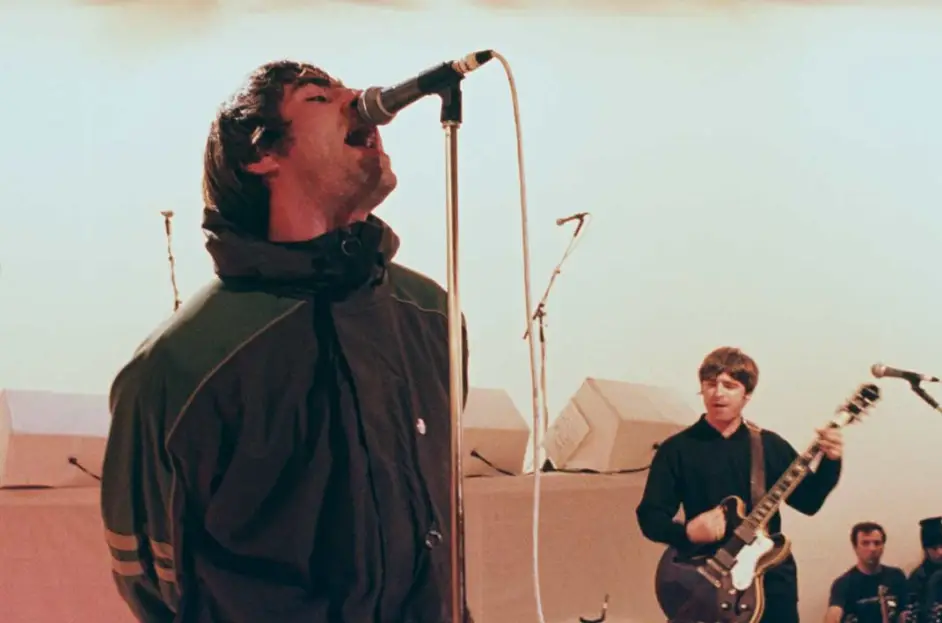
Hyden’s approach to 1997 is centered almost exclusively on two bands. Oasis leads things off. Their third full-length, Be Here Now, was released in April of that year. But much of the attention is on the years preceding it. Hyden shares his memories of first finding their debut, Definitely Maybe, in his local record store and blasting it on his mom’s car stereo while cruising around the Appleton, Wisconsin area. 

There is something so very American and wonderful about how the freedom to drive at age 16 has a personalized soundtrack, isn’t there? In the early 90s, cassette tapes were cheerily loaned or copied, be they albums or homemade mix tapes, and much musical excitement took place on the suburban streets or stretches of highway. I could name a thousand of these instances, but the most fun one I can recall is when our friend Boris presented “Jump Around” to everyone in Brad’s Toyota Paseo. Not a lot of space to jump around inside a moving Paseo, but we somehow managed to follow the song’s directions without causing a crash.

Hyden states that Oasis was one of his favorite acts in the second half of the 90s, which is something that was surely true for many people. As he put it, “Great Oasis songs were like sharks – no brains, all teeth, and out for blood and naked girls.” They were purported to be the second coming of The Beatles, only with selfish rockstar attitudes. The second half of this was true, but the failure of Be Here Now kiboshed the loftier ambitions. Yet, their popularity was earned with some of the catchiest tunes of the decade, and a clear step forward for rock music.


Radiohead provided the perfect contrast. Another UK group that started off as a band to complain about. Another Bush who was merely ripping off the Pixies and Nirvana. “Creep” was a huge hit off their first record, but not remotely original. Their second album, The Bends, showed some musical progression, with some memorable songs, but was not exactly breaking new ground. Which is why OK Computer landed as perhaps the biggest revelation in music history. This is not hyperbole.

I vividly recall hearing “Paranoid Android” for the first time, accompanied by its insane NSFW video (which could not be more 90s). This was not just different for Radiohead. It was different from anything anyone had heard before. The entire record presented a perfect merging of the band’s talents and pointed to an entirely new direction for them as an avant-garde yet incredibly popular rock band, something that hadn’t existed since the 1970s. Hyden makes the point that, in addition to the very public rivalry between the two acts, Oasis and Radiohead can be seen as divergent entities

Radiohead looked like Gallant to Oasis’ Goofus. Oasis was in hock to the past, relying on the stature of the British rock heroes they were stealing from to give weight to oversized gestures not even the Gallagher brothers could pretend to be enthusiastic about anymore. Radiohead appeared to be ahead of the curve, forecasting the paranoia, media-driven insanity, and omnipresent sense of impending doom that’s subsequently come to characterize everyday life in the 21st century.


In the end, Oasis definitely definitely felt like the end of something. They had two great albums with songs forever cemented in the musical consciousness of pretty much everyone. And then they ran out of worthwhile things to play and to say. As mentioned in the last post, there were a ton of very good English bands in this space, but the one that took this sound forward, in the most neutered way possible, though drawing a bit on Radiohead’s influence as well, was Coldplay. That’s worked out very well for them, but it certainly feels like we could have had a better trajectory. Hyden brings them up with a relatively positive mention. But this book is 14 years old, and things have, let’s say, evolved.


I know this is not how Hyden was going about it, and he says in the prologue “you’re going to complain when I leave certain bands out.” But given how morose 1996 felt, it’s worth noting that we got either seminal or level-up albums from the following acts: Hum, Poster Children, Richard Buckner, Old 97s, Get Up Kids, At the Drive-In, No Knife, Modest Mouse, Blur, and Spiritualized. Foo Fighters put out the indelible “Everlong.” The Verve resleased their most accomplished record to date (though, of course I prefer their earlier stuff). All this is to say that the early 90s chapter of alternative, grunge in particular, ended after 1994, and seemed like it would simply die, either of overdoses or lack of newness. OK Computer is the hall of fame player, but look at that list. These are all “alternative” acts, but across at least eight different subgenres. The best bands in the new century would be generally coming from the paths carved out by these trailblazers and their late 90s peers.

In 1997 I graduated college and moved back to Chicago. I missed the radio station and the colossal wealth of music and musical knowledge (i.e. loveable geeks) that I was immersed in. But I started a job and got lucky that there were other music geeks on the team. I had some disposable income and was living in a city chock full of great venues, one that no band ever skipped on a North American tour. We were surely in a new era, but the explosion of new ways to be an alternative band meant a never-ending pursuit of excitement. It didn't apply to the masses anymore, but I didn’t have to care about that. Who needs masses when you can see your favorite new shiny thing at the Double Door?

Do we have Radiohead to thank for that? No idea, but they deserve credit for elevating alternative more than anyone had in years. I’ll let Hyden wrap up, noting their status and their progression:

Nobody gets more respect than Radiohead. Other artists look to Thom Yorke for musical guidance, and his band is the gold standard for how to conduct a rock ‘n’ roll career with a measure of ethics and dignity. But let’s not allow our memories to pull a fast one on us. Once upon a time, Radiohead only wished it was special.

Monday, March 24, 2025

The Alternative 90s, the AV Club's Retrospective: 1996

Yes, we are still going through one of the great eras in music history, when the inmates briefly ran the asylum. This series is meant as a companion/reaction piece to Steven Hyden’s Whatever Happened To Alternative Nation? Accurately subtitled as “One man’s year-by-year journey into 90s rock.” You can get this highly recommend work on Kindle for just $2.99. Do it!

Look back for previous editions where we covered part 1, part 2, part 3, part 4, part 5, and part 6.


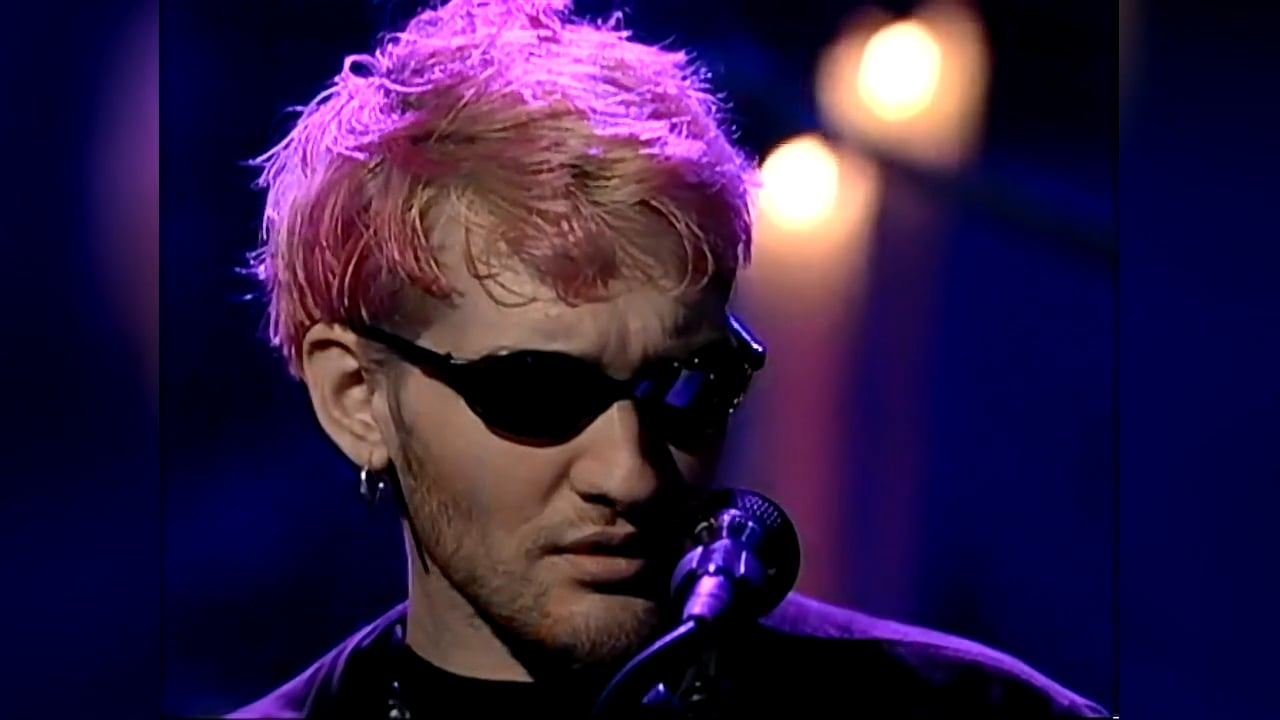
And now, we’re fully on the saddest part of the downswing of the alternative movement. The book focuses on human tragedy in 1996, and it’s probably the right way to go about it, sorry to say. Alice In Chains has been mentioned mostly in passing in previous chapters, but they were one of the four huge Seattle grunge bands and deserve a deeper dive. This is not only because Dirt was such a blistering masterpiece. The attention is paid more to Layne Staley’s slowly unfolding demise, which he himself called out well in advance.


Staley died of a drug overdose in 2002, but his presence in Alice in Chains ended in 1996, so in a sense his career was over then. The sex, drugs, and rock n roll were simply reduced to drugs.

Hyden then addresses the overdose of Sublime’s Bradley Nowell. The band was generally unheard of until after Nowell’s death in May of 1996, but soon their singles were everywhere, forging a new kind of alternative music subgenre. I recall people saying “I hope they tour soon, would love to see them live.” That was unfortunately not going to happen.


We’ll get into why he focused on those two frontmen and the cultural fulcrum at play. But while we’re at it, it’s worth noting that Blind Melon’s Shannon Hoon also died of an overdose with just nine weeks remaining in 1995, shortly after the release of their unfortunately overlooked sophomore record, Soup.  This also represented another end for alternative, in which Blind Melon had progressed past their highly successful hippie roots rock into something more interesting. Hoon had previously sung on Guns N Roses’ single “Don’t Cry,” and was therefore part of the bridge discussed in part 2. I can see why this didn’t make Hyden’s chapter, as Blind Melon was in effect reduced to a one-hit-wonder, but Hoon’s death was yet another sign of the bad times.

Personally, I never understood the appeal of Sublime, but the chapter helps me understand a bit more about where it came from. This was a different message and approach. A much more laid-back version of the culture where nobody should take themselves too seriously. Even the music was not as intricate nor muscular. Also, I was probably, at age 21, a bit too old for Sublime? It went against nearly all of my musical proclivities as someone who wanted power and intensity from this kind of art. It’s why I love Mahler much more than Mozart.


Hyden talks about the fact that this kind of music was a rejection of the cultural sensibilities that were inherent to grunge and alternative.

Soon, even bands directly inspired by the early 90s bands would conveniently set aside the feminist idealism those groups were known for in favor of an unapologetically assertive masculinity that was both reactionary to recent rock history and restorative of the old status quo.

Those sensibilities were in part a pushback of the hair metal and misogynistic cock-rock that preceded them. So perhaps this was in a sense a reckoning, or just a balancing out of the cyclical nature of American culture.

It surely didn’t help that grunge and alternative had become more derivative and watered down. Stone Temple Pilots was probably the best of the mediocre copycats, but their 1996 record produced no enduring singles. (And yes, in 2015 their lead singer, Scott Weiland also was found dead on a tour bus following a drug overdose.)


In truth, with a quick scan of 1996 releases, at least in my record collection, it’s mostly bands I’d long adored putting out merely good releases that are far from their best work. Down on the Upside, Chim Chim’s Badass Revenge, Good God’s Urge, Dust, Evil Empire. 1996 was a “placeholder” year where bands either were at the end of their productive period or were trying to figure out their next move.

There were two standout releases from established artists at opposite ends of the alternative spectrum. Tori Amos had in effect created what would become the Lilith Fair movement over her first two records. They were highly personal, powerful, and well-crafted albums that captured fans from a wide range of personal tastes. Her third effort, Boys for Pele, was both more stripped-down and challenging with odd rhythms and instrumentation. The provocative output was panned by some critics and misunderstood by many fans. To me it stands not just as her best, but one of the top records of the back half of the 90s, but I don’t think it changed the trends. She never made a record as ambitious as this one again.

Near the end of the year, Tool released their second full-length album, Ænima. This brought a combination of top musicianship prog rock to both alternative and metal audiences. People who were drawn to the band initially by gothic puppetry and heavy-crunching choruses were asked to keep pace with strange time-signatures and three tracks nine minutes or longer. And they did. It’s been said that the worst thing about Tool is the stoner bro fanbase. But the fact remains that few rock bands can even sniff what they’re capable of. Some heavier bands would aspire to Tool’s intricate approach, though, alas, for the next several years, most would go the route of Korn, Stained, Slipknot, and Linkin Park.

Meanwhile Beck showed up with Odelay, his most acclaimed record. At the time, it definitely felt like the intensity of Alternative was over, and slacker rock would replace it. Hyden’s point is that Sublime’s rise was charting the direction that the mainstream movement would take – more slacker, less cerebral, more white guys rapping over rock.


1996 feels like a death knell for so many reasons. Yet we’re all still here, listening to music. As we’ll see in 1997, there was an opportunity for new beginnings on the rise. It’s just that the glorious period of inmates running the mainstream asylum was fully complete. We were back to Zubaz pants again, just with a slimy, grimy look.

Wednesday, March 19, 2025

The Alternative 90s, the AV Club’s Retrospective: 1995

I’ve been feeling the urge to resurrect this here blog for a little while now. It seems I have not added to it in over two years, and that was just a blip after a previous 3.5 year hiatus. But I have the urge to write, and recently said my final piece about sports. I can’t make any promises, but today’s the day to restart because I stumbled into some unfinished business, already made clear by the title of this post.

My kindle was stolen, and it took well over a year to get a replacement. I finally have, and the first book I started reading was something I already read in its entirety. Steven Hyden’s Whatever Happened To Alternative Nation? Accurately subtitled as “One man’s year-by-year journey into 90s rock.” All of these chapters were originally published on the AV club, but now only the first entry is available on their site, as far as I can tell. However, the rest has been republished as a kindle book for the low, low price of $2.99.

I have already written reaction pieces to part 1, part 2, part 3, part 4, and part 5. These are meant to accompany the work written by Hyden, and to be clear I think this is a fantastic read. So ideally, find a way to get your hands on his work, then check out mine. And now, without further ado, 1995.


This blog stalled out for many personal and professional reasons around early 2011, which is somewhat aligned with when these articles were published. At the same time, I can see why I never made it past 1994. It’s facile to say that Cobain’s suicide marked the death of the alternative era. But as you’re about to see, 1995 is when the dirt started being poured on, and well, it’s not thrilling.

Hyden begins by bagging hard on a band I quite liked for a while, but never loved, York PA’s Live. In honesty I don’t think anyone ever loved this band. Their first full-length, Mental Jewelry, had something to it, despite them obviously taking themselves too seriously, and then Throwing Copper became a massive hit. Hyden lays out how all of that happened. And also how damning it can seem. Nobody is actively listening to these guys any longer.

For me, seeing them perform at the State Theater in Detroit on the Throwing Copper tour was what dulled my interest. Whatever magic they had did not translate to in-person performance, something most people who have experienced their shows agree upon. Has there ever been a more ironically named band?


This is all set up to greater tragedies. Hyden sets the scene:

1995 was a time when the superficial aesthetics of alternative music – down-tuned guitars, downbeat melodies, frowny-faced (but still telegenic) stars – had been fully absorbed by corporate star-markers, who set about flooding the market with high commercial bubble-grunge bands that took everything that seemed fresh just three years earlier out of context and straight into the meat grinder.

Yes, that’s a big ol’ yikes. I had previously complained that Hyden was not calling out warmed-over regurgitation like Collective Soul and Candlebox. Turns out he was waiting for this moment to lay the hammer down. Live was just the jumping-off point. At least they were a real band who made their own music, even if they got much bigger than they probably should have.

He then appropriately takes Bush for a ride, pointing out how blatantly, intentionally derivative their music was. He almost begrudgingly gives them credit for doing a smart job following the trends. It’s no surprise that we basically did not hear from them following the success of Sixteen Stone. There’s only so much to say about this album, but the point is it did sell over seven million copies worldwide. This comment is worth sharing:

There’s also the awful ballad “Glycerine,” a song I’ve always hated and occasionally slow-danced to.

In 1995 I spent my summer in London as part of a study abroad program. Bush was already getting very popular by the time I took off. Yet I did not hear any songs by Bush until I returned to college at the end of August, even though I was living in their hometown. The 1995 British version of alternative rock was still massively popular, and there was no shortage of single-named UK bands getting airplay constantly – Oasis, Pulp, Blur, Verve, Suede, just to name a few. But I imagine Gavin Rossdale could have walked down any street totally unnoticed in London then.

But there were darker things happening back home that I was blissfully unaware of, drinking my pints and eating my fish n chips.

Over the summer, a brassy Canadian had launched a seemingly benign salvo across the southern border, but little could anyone have predicted, “You Oughta Know” became the song of the summer. I don’t recall the first time its bratty tones reached my ears, but my “what is this mess?” reaction to hearing it caused a clear reaction from friends who said, “You haven’t heard this?” As Steven explains:

Even more than Sixteen Stone, Jagged Little Pill demonstrated that mainstream pop had assimilated the sound and feel of alt-rock and could now turn out artists that fit the mold without all the troublesome baggage of BS punk rock credibility.

Yeah, but 33 million copies. 33,000,000. Seriously, what the fuck? It turns out that this was far more craven exercise than Bush’s Nirvanization of their existing sound. As you may know, Alanis Morrissette was a failed pop-star in her home country. This, despite a juicy gig opening for Vanilla Ice on his tour.

It turns out, this was simply a pairing of Morrissette's vocal abilities with professional songwriter Glen Ballard who was already highly successful with Wilson Phillips among other achievements.

 I’ll let Steven explain:

In the aftermath of Pill’s incredible success, Morrissette and Ballard both spoke of having an instant creative connection, writing their first song together within minutes of meeting each other: “It was as simple as me picking up my guitar and hitting a couple of chords, and she would go ‘I like that,’ and she would hit a melody and I would hit it back to her,” Ballard recalled in an interview. Morrissette and Ballard worked quickly throughout the sessions for the record, spending no more than a day writing each track.

You don’t say…

We could belabor this, but I prefer to touch on something else that is a bit buried in this chapter, but perhaps more relevant. Hyden talks about Guided by Voices’ Alien Lanes, and how he evolved from largely grunge-centric, to focusing on more “college-friendly” music (my wording). The series is of course prioritizing the most popular music of the time, as one would expect.

But it got me thinking that I also had a very fortunate awakening. I was DJing at the campus radio station, WCBN. By rule, you had to spin freeform, which means drawing on all kinds of music genres. This opened my mind and ears up to an incredible spectrum of what music can be. While I never “walked away” from alternative music (I’m currently listening to Pearl Jam’s Vitalogy for some strange reason), I did walk all over, and truly embraced new opportunities.

Indeed in 1995 things were rapidly deteriorating. I don’t recall them getting much better, which means I go into 1996 with a bit of dread for what may be lurking there. But I will continue reading this 14-years later flashback of Hyden’s 14-years later flashback. Go get the book if you want to follow along.


Monday, December 13, 2010

The Alternative 90s: The AV Club's Retrospective: 1994

Here we continue to react to the Steven Hyden's take on the Alternative 90s. Click over yonder to review Part 1, Part 2, Part 3, Part 4.

Without a doubt, the biggest event in the Alternative Rock movement in 1994 was the suicide of Kurt Cobain. In the latest update of his retrospective, Hyden devotes the majority of his time to this event, starting off with a candid and self-deprecating explanation of how it went down for him. I hadn't realized it, but Cobain's demise certainly was a "where were you when" moment. We don't have so many of those our generation, and this one is easily more trivial than the Challenger explosion, Columbine High School, or 9/11. But I suppose I will always remember riding around in a girl's car on North Campus while my buddy Ken announced on the college radio station, "Kurt Cobian blew his brains to Brooklyn," before spinning "Rape Me." We turned up the volume and drove along. At that moment, Cobain's death clearly wasn't all that important to any of us. We weren't Nirvana fans. Beyond noting the significant newsworthiness of the event, we were unaffected. Or maybe it was Ken's fault for joking about it in the first place.

The only Nirvana album I've ever really cared about was Incesticide, which isn't an album. But it is easily the most interesting collection of songs they released. A recent review of their discography only confirmed this notion. Our flippant reaction perhaps wasn't warranted, but we were 18 years old and to us it was just another news item that had little bearing on our lives. All we knew was that Nirvana was about to see a spike in record sales. Sometimes, when you're in college, you can be surprising isolated from the rest of the world. Even Lewinskygate a few years later was not big news compared to things we were actually busy with. While this may have been an international event, to us, it was just one day's news, driving around.

Hyden took it far more personally, as did almost everybody else. He delivers an excellent piece of research, laying out all kinds of details and interpretation surrounding Cobain's tragic demise. Perhaps the most interesting (but also the most heavy-handed) is his interpretation of the band's famous Unplugged set as a self-thrown funeral for Cobain.
In light of Cobain’s suicide, MTV Unplugged In New York was commonly heard as the work of a man committed to the idea of being dead as soon as possible. I know I’m not the only one that hears Kurt Cobain performing his own burial rites whenever the record plays. It’s not just a matter of the music’s close proximity to Cobain’s death; the suicide simply brought what was already there into greater focus.
To be sure, his suicide was not a surprise at the time. Hence our lack of drama in hearing the news. And maybe Cobain planned the Unplugged performance that way, but only he really knows and he's not around to tell us. To me it's more of a Rorschach test. I see a guy in a lot of anguish, Hyden sees a guy who was deliberately tell us he was going to kill himself through song.

Hyden then steers the direction to Soundgarden's breakthrough album, "Superunknown." Had Chris Cornell died at the time, then I would have been a lot more affected. As they hit the big-time, I went through many of the same conflicts as I had with Smashing Pumpkins earlier, though with a few differences. At least with Smashing Pumpkins, the hit songs were good. Soundgarden's most successful tracks were also their worst. The first time I heard Black Hole Sun, I was overwhelmed by its banality. I couldn't believe this was the same band that had created Jesus Christ Pose on their previous record. That said, there were plenty of good songs on Superunknown, even if the band had backed away from the heaviness that had made their Badmotorfinger so successful (for me).

And with all this important news, there is no room for the other tragedy involving a Georgia band called Collective Soul. A band of mediocre talent and lesser songwriting was packaged as alternative and went platinum. Seriously, this was their hit single. It pointed alternative music in a new direction that soon became a tailspin from which the genre would never recover. At least Cobain wasn't around to see it.

In the end, Hyden's narrow take on the year leads him to make some conflicting conclusions:
Kurt Cobain was not a martyr, and I’m not going to dehumanize him by turning his life and death into a crushed velvet painting. But I’m also not going to let Nirvana be reduced to a load of hype signifying nothing. Yes, I was one of the mourners. Kurt Cobain's music made my life better, opening me up to new worlds that enriched my existence immensely. I’m extremely grateful that Nevermind came into my life when it did, because I was a lonely kid that really needed something to connect with. Just because I’m fortunate enough to no longer be 13 years old doesn’t mean I’ll ever set aside my gratitude for what Cobain once gave me, or my grief for where he ended up. I can only speak for myself...here; maybe you didn’t give a shit. But to me, you’re goddamn right Kurt Cobain fucking mattered.
In Nick Hornby's "About a Boy," he uses Cobain's impending suicide as a clumsy plot vehicle. It was wisely removed from the movie. I guess I feel similarly about Hyden's latest article. Of course he can't possibly have ignored Cobain's death. As I said, it was the biggest event that year. But in the end, did it really do anything to music? Nirvana would have had more albums, and so that's a loss. But the way things were moving, with the onslaught of more and more crappy, knockoff alternabands, what Nirvana stood for was doomed either way. Cobain could have been a dead martyr or a living one. He chose the way he had to. And we can have whatever opinion we want about it, but those opinions don't matter.

It's another solid output from Hyden, but one that I'm afraid doesn't move me quite as much. But his next post should be up tomorrow!

Tuesday, November 30, 2010

The Alternative 90s: The AV Club's Retrospective: 1993

Here we continue to react to the Steven Hyden's take on the Alternative 90s. Click over yonder to review Part 1, Part 2, and Part 3.

Hyden ventures away from Seattle in his review of 1993, focusing on the acts that made it big from his closest metropolis as a teenager and my hometown: Chicago.

My expectations for this segment were far too lofty. But that's understandable. Of all my musical passions in life, this "moment" was the most inextricable from my own existence. I graduated high school and found the profound liberation that is college life. Those events were inextricably linked with the development of my passion as a music fan. Plus, it certainly didn't hurt that 18-and-over shows were suddenly events available to me. It was the first real awakening of my life; the music couldn't have mattered more. And the Smashing Pumpkins' Siamese Dream was the album that it all centered around. It was the first record I truly connected with. I even believed with great certainty that Billy Corgan and I had nearly everything in common. Perish the thought...

But I had very little to do with the other two albums Hyden covers. Liz Phair was undoubtedly important, giving an indie voice to women that hadn't existed. If mainstream trends are founded on grassroots movements that comprise the initial foundation, then Phair opened the door for Tori Amos, Fiona Apple, and every Lilith Fair. Hyden's take on the album is awfully cogent:

"I found Guyville titillating and unnerving, which is essentially how I felt at the time about every girl I had ever met. In my world, women had all of the power, which created a not-quite-healthy mix of worship and resentment of femininity that’s common to a lot of boys that age."
That's my soul up there, man. Or at least it definitely was in 1993.

He then gets into Urge Overkill, a band that held my interest for all of twelve minutes or so. The rock world didn't stick around a whole lot longer. This is all backdrop to tackle the concept of "selling out" - tremendously important in 1993. And Hyden provides great context here, quoting the gleefully dickish Steve Albini. Albini raised the torch of the true underground.
"To Albini, indie-ness was both a science and an evangelical religion; he could be persuasively pragmatic about how bands were better off personally and creatively treating music as a pastime rather than a job, and then land patently insulting roundhouse blows against anyone dumb, silly, or unlucky enough to disagree with his fiercely held views."
It never struck me that there were so many levels to the notion of selling out to the mainstream and being true underground. Without a doubt, I would have been declared a poseur by many. I must admit that in my life, I used people's taste in music to judge them. But this was never more true than in 1993. Let's put it into context. Despite the success of Nirvana and Pearl Jam, most people were still into some pretty terrible music and pop culture in general. Zubaz pants were only one year past their peak, for instance. Most of my high school class was into the Grateful Dead or classic rock. To be with the kids that gravitated toward something new was to refute the status quo.

It took me years and years to stop judging people based on their personal tastes. Today it is totally irrelevant to me, but perhaps at the time taste was a clearer indicator of character than anything. There was, for those brief couple of years, a difference between people who liked Pegboy and those who liked The Beatles. There was something reliable about each group. So while Albini may have been tilting at windmills, he at least did so with a worthy point.

Meanwhile, at the very same time, something was starting in alternative music that would never be stopped. That something was perfectly embodied by the Spin Doctors. A crappy band with a crappy name and crappy songs packaged to appeal to the Alternative generation. Perhaps Hyden is leaving them alone for now to lump them in with Candlebox and Collective Soul when we get to 1994. But the hijacking of the movement had already begun. I mention this now because it is central to the issue. If someone said they were a fan of "alternative music", yet hit the town wearing a Spin Doctors t-shirt, you could immediately tell that they weren't part of any scene.

Back to the band at hand - Smashing Pumpkins. As I said, at 18 this album was one of the most important things I'd ever owned. I went to two of their warm-up gigs at Metro, assuming the next time they came through Chicago it would be at the Aragon, then the UIC Pavilion, then Soldier Field. In a way, those were the last shows I saw as an impressionable youth. Just a couple months later, the band was taking the world by storm, and I had to play up the fact that I had the EPs, not just the albums. I was still trying to show how cool I was by talking up a band everybody already knew.

We all know what Billy Corgan became. And I was one of the last people to acknowledge it. Hyden sums up what happened to the band thusly:
"Like Klaus Kinski in Werner Herzog’s masterpiece of megalomania, Aguirre, The Wrath Of God, Corgan kept the band together to satisfy his maniacal pursuit of endless power and riches. In Aguirre, Kinski ends up adrift on a lonely stretch of the Amazon with a raft full of corpses and wild monkeys; Corgan had better transportation, riding the stainless steel perfection of Siamese Dream’s impeccably conceived guitar-rock hymns straight to the promised land."
The point here is that he was selling out from day one. Whether Corgan was always a nutty egomaniacal asshole could probably be easily determined. But I don't care to make that determination. For me, 1993 will always be the year that I broke out and it wouldn't have happened without this music. By the next year, the alternative scene ship had wrecked. At the very least, I had to start choosing friends on a more substantive basis. All part of growing up.

But let's make sure we end on a high note. 18-year-old me is somewhere in this mosh pit. See if you can find me. I'm the one going crazy...


Part 5 was posted today, which means I'm behind (as usual). Feel free to dig into that one here.

Tuesday, November 16, 2010

The Alternative 90s: The AV Club's Retrospective: 1992

Here we continue to react to the Steven Hyden's take on the Alternative 90s. We started with Part 1 here.

In covering 1992, Hyden focuses almost exclusively on Pearl Jam, using them to highlight the double-edged sword that is massive mainstream popularity. Hyden does excellent research here and has penned what is so far the best column in the series. The backstory on Pearl Jam is far more fascinating than I realized.

Honestly, the band never interested me that much. By the end of my freshman year of college, they were by far the most popular band in the world (of college freshmen) to the point where there had to be a painstaking explanation prepared for every guy wearing a dirty white baseball cap that couldn't understand where I was coming from. And this is really the whole point of Hyden's latest. How could a band that seemingly had no desire to be universally liked end up being the most popular band of its era? And what the hell are they supposed to do once they find themselves in that situation?

But first the setup. Hyden talks about how they arrived:

"I hated that the chorus didn’t tell you what 'even flow' was supposed to be, and the line about thoughts arriving like butterflies sounded like a bad Natalie Merchant lyric. Still, the video for 'Even Flow' succeeded in doing for Pearl Jam what the 'Pour Some Sugar On Me' video had done for Def Leppard four summers earlier: It made you wish really hard that Pearl Jam would come somewhere near your town very soon."
And that sounds about right. All of Ten is basically a series of riffs lifted from one Jimi Hendrix song - Voodoo Chile (Slight Return). That happens to be one of the greatest songs in the history of everything, so they certainly could have chosen worse. (Incidentally, hearing Even Flow can't help but remind me of Adam Sandler's caricature of Eddie Veder. That happen to you?)


There's no denying that Pearl Jam was the right place at the right time. No reasonable fan would consider them virtuosos in any respect. But to this day Eddie Vedder makes for a compelling frontman, the most accessible of the Alternative movement.
"As Vedder and his increasingly marginalized supporting cast distanced themselves from the record’s gauche chest-thumping by churning out progressively restrained, more 'mature,' and less expressive music, Ten was dusted off by other bands and recycled again and again. Today, Pearl Jam is a popular touring band and intermittently successful on the charts; Ten, meanwhile, is still all over modern-rock radio, though only a handful of the songs are actually by Pearl Jam."
The point is, it's nearly impossible to stay on top while doing something in earnest. I would add that it doesn't help if you're not a very talented band to begin with. As much as I am ragging on the band here, you have to give them credit. They could have gone the route that nearly every popular band from the 90s went. To "Jonas Brothers" it up. But they took another path.
"Pearl Jam isn’t the first veteran rock band to see a decrease in fans as it got older. But it’s the best example of a band deliberately expediting the process."


Hyden finishes by noting that with 20/20 hindsight we can easily identify that the band (and therefore the year 1992) represented a fulcrum for the direction of Alternative music.
"For three years, Vedder occupied a unique and important place in mainstream rock; that he allowed it to be taken over by people like Scott Stapp isn’t unforgivable, just unfortunate."
It's impossible to argue with that statement.

Part of me will forever associate Seattle with the early 90s grunge scene. My brother lived there for several years. I've visited twice. I've made many friends from that city. But even though it should have, my impression hasn't changed. Maybe because of the age I was and the way a person forms perspective. It's 2010, and I still view the Emerald City through flannel-colored glasses. That's not just unfair but ridiculous. And yet I'm sure that millions of people around the country think the same way.

Back to the topic at hand. Pearl Jam never meant very much to me, even as they were capturing all the hearts and minds surrounding me. Hence, I don't find myself caring that much about their story. In fact, I often forget they even exist. Futhermore, I forget that they were not only a part of the movement, but one of the two or three most important bands in it. But like I said, it's a fascinating story. This is a superb piece and you can tell Hyden is building to something even better. I can't wait for the next one. Good thing it comes out today.

Monday, October 25, 2010

The Alternative 90s: The AV Club's Retrospective: 1991

We kicked off by reaction to Part One earlier this week. Start there for background. Now we'll catch up with Part 2: 1991: What's so civil about war, anyway?.

Hyden devotes the majority of his 1991 column to the intense, public feud between Kurt Cobain and Axl Rose. It's an interesting place to move forward. Our collective memory doesn't recall a time when Hair Bands and Grunge Bands shared the same stage. We forget that Use Your Illusions I and II came out just a few months before Nevermind. For most people, these bands occupy times separated by years conceptually. Yet there was this tumultuous overlap. Hyden rightfully identifies the incongruity between reality and perception, and does some really solid research in providing key details. As Hyden points out, this was no mere battle of egos:

"Rose signified old-guard, cock-rock superstardom, and Cobain was never more deliberate in his desire to dismantle that institution than in his outspoken criticism of Guns N’ Roses."
That said, Hyden gives proper credit to GnR for transcending the other Hair Metal at the time (highlighting the Welcome to the Jungle video). There was a major difference between Guns n Roses and the rest of the Hair acts out there. They weren't singing "She's only seventeen" or about "Cherry Pie."

Hyden's main point is that there is a lot in more in common between these two iconic figures than people think. And he turns the column to the personal and how he interpreted all that was going on.
"In 'One In A Million,' Rose sings, 'It’s been such a long time since I knew right from wrong / It’s all a means to an end, I keep it movin’ along.' By the end of 1991, I chose Kurt Cobain over Axl Rose because I wanted someone who did know the difference between right and wrong."
For Hyden, this is the balancing point in his life as a music fan. And it was for many.

He touches on it briefly, but devotes so much time to the details that he misses what I believe is the interesting part about this moment in history. Nobody remembers that these were the two most popular American rock bands at the same time. And many people liked both. The stories he recants are crucial but don't really address the movement until that last line about knowing the difference. Not to go all Wesley Willis, but I saw Smashing Pumpkins open for Guns N Roses at the Rosemont Horizon in early 1992. Maybe such a bill didn't make any sense, but it happened. Some people booed and threw things during the Pumpkins set. Others appreciated the shredding taking place onstage. The booers would surely become enamored with Smashing Pumpkins two years later, and tell all their friends that they saw them when they were "nobody."

The thing is, both bands kicked ass on stage that night. And I didn't have to choose between them. In the moment it didn't feel like the end of anything. Only years later can we say that Grunge eliminated Hair Metal. I suppose that was Cobain's crusade and he was in tune with that goal. If that was a key objective for Cobain, he surely failed. Not because Axl's still here, but because of what became of Alternative Rock in the years to come (from Collective Soul to Matchbox 20 to Nickelback). In the end he didn't want Axl's throne, or really any more time in the spotlight. If this integrity issue was so important to him, then maybe it's for the best he didn't live past 1994. Then again, we only knew the glory days would be so short after the fact. But that's a topic yet to come.

Other comments:

Hyden says, "The dual release of the Use Your Illusion albums was an act of hubris so brazen in its arrogance and yet strangely admirable in its artistic stubbornness that nobody had been fucking crazy enough to try anything like it before, or attempt to copy it in the nearly two decades since." Perhaps it's not a perfect comparison because it's not like he's a huge star, but Tom Waits released both Blood Money and Alice on May 7, 2002.

I feel like Hyden missed an opportunity here. If this is really a retrospective look at the entire alternative movement, 1991 is the year where everything started to pivot. Obviously any movement takes years of gradual shifting to set up, but 1991 is the year everyone circles, and for good reason. Lollapalooza began that year. And all these are just some of the albums that were released:
Pearl Jam - Ten
Red Hot Chili Peppers - Blood Sugar Sex Magik
Smashing Pumpkins - Gish
Soundgarden - Badmotorfinger
Fishbone - The Reality of My Surroundings
Primus - Sailing the Seas of Cheese
Dinosaur Jr. - Green Mind

So he focused on a key story - a very important one, but I worry that we are losing the thread a bit. Still, another worthwhile read. Looking forward to 1992 which should be out tomorrow.

Tuesday, October 19, 2010

The Alternative 90s. The AV Club's Restrospective: 1990

In reviewing the Top 50 Albums of the 00's, even though I have clearly enjoyed the journey through the decade's best, I have found myself longing for a more prolific time. I turned 14 in 1989, the perfect age to receive the gift that was the ascension of Alternative Rock. My rock and roll formative years began right then. It was a tremendous time to care about music, and thanks to my own impulses and a series of friends who helped me connect to everything I was hearing, everything that happened during the entire decade had a profound effect on me. I wasn't a hipster savant who found the greatest unknown rawk discoveries way before anyone else. But I kind of felt like it anyway. Growing up just outside Chicago, we had unfettered access to some of the world's greatest record stores, random independent and college radio stations, and even some all-ages shows. In some ways, it was the first time I truly cared about something.

Over at the AV Club, Steven Hyden is reviewing the 1990s Grunge movement year by year. I happen to find this a totally worthy endeavor for the reasons above and many more. Much of what happened in those halcyon days has been lost because there was no internet to document them, or because nobody's made an iconic movie yet, or simply because we've all moved on.

What Hyden is doing is more important than it seems at first glance. If you're in your 30s, then I urge you to read the feature and find your own reaction. If you're younger, well, as Hyden says, I shouldn't say something like "you missed out!" But really, you did. And if you want to know why mainstream music sucks ass the way it does today, it's important to understand that it once sucked even more ass, and somehow that got fixed, but only for a couple of years before it rapidly eased its way back to sucking ass.

Because I have my own ideas and experience (and blog), I'm going to post my reaction to each of Hyden's ten segments. Up first, Part 1: 1990.

Hyden sets the table well. He gives his background, calling himself an "awkward adolescent from Appleton, Wisconsin." The context is important here. He doesn't completely explain quite how bad the music scene had been. He mentions some of the atrocities, but it's important to remember that by the end of 1989 we're only a year removed from New Kids on the Block. We were at the apex of Richard Marx, Bobby Brown, Paula Abdul, Milli Vanilli. "Rock" music offered Poison, Great White, Mike and the Mechanics, White Lion, and a duet between Cher and Peter Cetera. Vanilla Ice was yet to come. Hyden chooses to play a bit loose with the timeline here as the majority of the column deals with the mainstream arrival of Nirvana's "Nevermind," something that didn't really start happening until 1992 (the album was released at the end of September in 1991). Just so we're clear about the context, here are the top 12 singles from 1990:
1. Hold On, Wilson Phillips
2. It Must Have Been Love, Roxette
3. Nothing Compares 2 U, Sinead O'Connor
4. Poison, Bell Biv Devoe
5. Vogue, Madonna
6. Vision of Love, Mariah Carey
7. Another Day In Paradise, Phil Collins
8. Hold On, En Vogue
9. Cradle of Love, Billy Idol
10. Blaze of Glory, Jon Bon Jovi
11. Do Me!, Bell Biv Devoe
12. How Am I Supposed to Live Without You, Michael Bolton

So yes, apart from Billy Idol's death rattle, those were dark days indeed, especially in Appleton, Wisconsin.

But given that we're here to celebrate the past, perhaps it doesn't make sense to dwell too much on the bleak state of pop music entering the decade. Hyden jumps forward because if you're going to talk about rock in the 90s, the discussion must begin with Nevermind. And he couldn't be more on-point with the key issues:

"Kurt Cobain turned himself into a radio star at a time when somebody like him becoming a radio star seemed unfathomable."
"These guys were not supposed to be here, on MTV, sandwiched between Jane Child and Lisa Stanfield videos at 1 p.m. on a Tuesday."
The truly amazing thing that happened in the 1990s is that for a brief period of time, the inmates ran the asylum. Or at least that's the way it seemed. Bands that had no business becoming rock stars became the biggest rock stars in the world. And like any revolution, it happened seemingly without warning. After controlling which bands made it big throughout the 80s, the industry was caught by surprise. This never happens in mainstream music. I hope that we get into the details in the entries regarding subsequent years.

Eventually, Hyden steers away from the musical implications and arrives at the social ones, saying:
"I honestly wonder if the rise of grunge and alternative rock in the early ’90s will be the last time that a musical movement has that kind of impact on youth culture."
That topic, only touched upon, leaves a lot of room for exploration. Did youth culture actually change in ways it wouldn't have otherwise? Was the "Smells Like Teen Spirit" video the reason tattoos became mainstream? (I had always attributed this to Alan Iverson, but I now question that theory.) Did young Americans really start to think a different way? Is The Big Bang Theory in the here and now because of Nevermind? These questions deserve their own posting, and perhaps Hyden will go into more detail later. As someone who lived through it, it's impossible to answer. There's no "control sample" me.

To sum up, an excellent start to the series for Hyden, and I greatly look forward to the subsequent entries. 1991 is already up, and we'll take a look at it here as soon as possible.

Please share your thoughts. Where were you when your face first melted to something other than Hendrix or Hazel? And what do you think of Hyden's premises?